







Search Results for: Heilongjiang University of Science and Technology
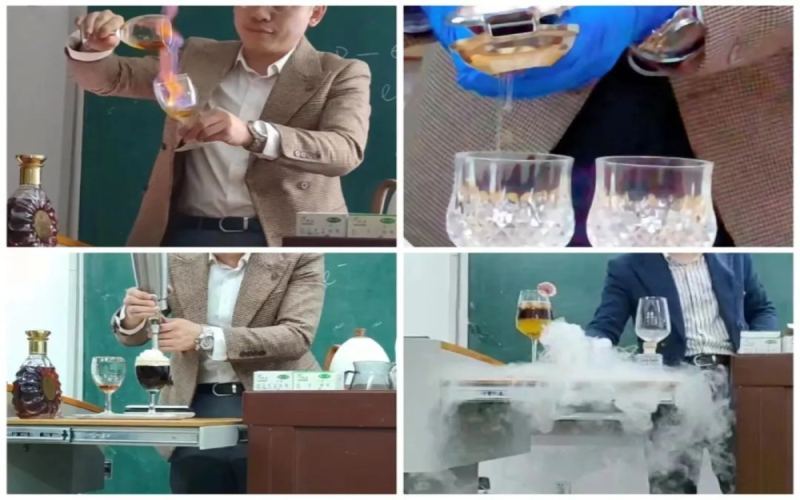
How appealing is a coffee elective course at university? A full analysis of classroom records and the course-grabbing frenzy
As finals approach and most students look forward to the holidays, students taking the elective coffee course at Heilongjiang University of Science and Technology hope the course never ends—because finishing it means never again getting to drink the free coffee made fresh in class. In a classroom video, the teacher explains and prepares Irish coffee at the podium, flames dancing between glass cups, drawing gasps from the students. This elective, covering coffee culture, tasting, and preparation, has become one of the hardest courses to get into on campus, with some saying that even spending all their credits might not guarantee a spot. Students from other universities openly envy it, and graduates lament missing out on such a great course back in their day. This article will take you through what this coveted university coffee course actually teaches and why it is so wildly popular. [more…]
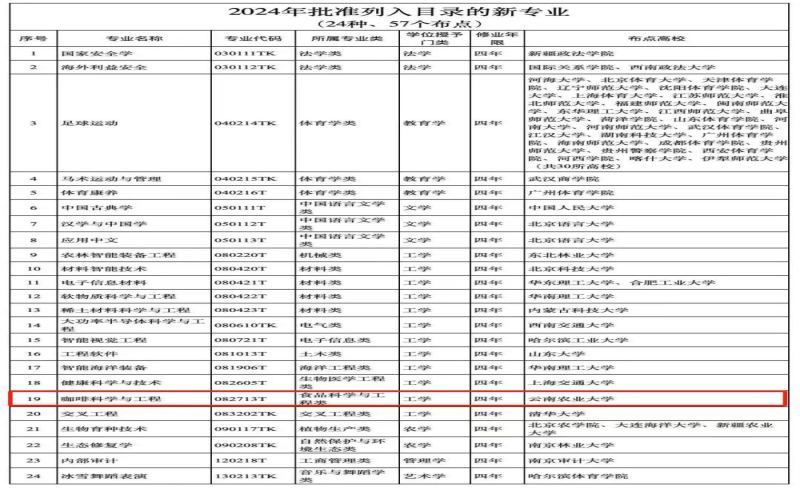
Ministry of Education Adds Coffee Undergraduate Program at Yunnan Agricultural University, Industry Talent Gap Awaits Filling
Attention coffee lovers,重磅 news has arrived: in the Ministry of Education's latest 2024 undergraduate program catalog, Yunnan Agricultural University's application for a "Coffee Science and Engineering" major has been officially approved, which means the world's first undergraduate coffee talent training program has landed in China. What exactly does this major study? Why is the market so hungry for coffee talent? This article will take you through the curriculum of this emerging major, the industry background, and the huge potential of the coffee market, while also focusing on the current imbalance between supply and demand of talent in the coffee industry. [more…]

USTC Develops Edible Coconut Jelly Straw to Replace Paper Straws, Doubling Strength and Fully Degrading in 60 Days
In recent years, with the advancement of plastic restriction policies, plastic straws have gradually exited the food service scene, replaced by paper straws and PLA straws. However, paper straws easily become soggy, and PLA straws are not heat-resistant, greatly diminishing the consumer experience. A team led by Academician Yu Shuhong of the University of Science and Technology of China has taken a different approach, using bacterial cellulose combined with sodium alginate to develop an edible nata de coco straw. Its strength, modulus, and toughness are more than twice those of paper straws, it is thinner, and it can be made in different colors. Buried in soil, it nearly disappears in 45 days and completely degrades in 60 days. Can this new material save the afternoon tea joy of office workers? This article will provide a detailed interpretation. [more…]
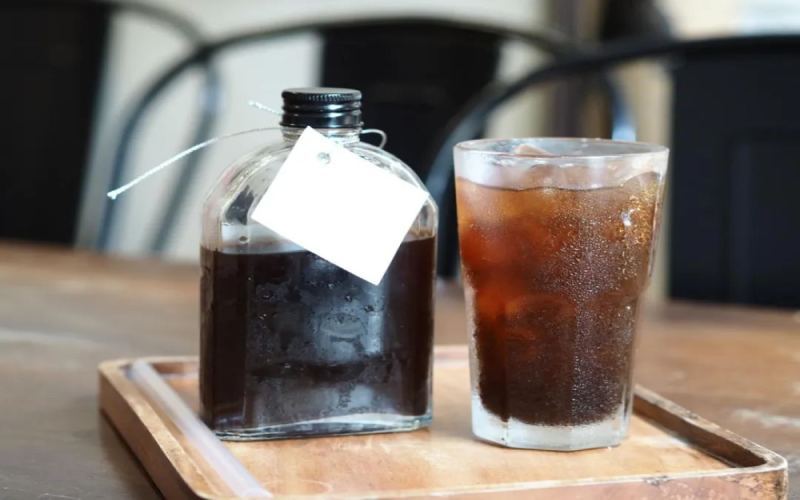
Laser Pulse Technology Boosts Cold Brew Coffee: A New Scientific Breakthrough Achieving Extraction in Three Minutes
On a scorching summer day, a refreshing glass of cold brew coffee is a favorite for many coffee lovers, but traditional cold brewing often requires a wait of 12 hours or more, which puts people off. Now, a chemistry research team at the University of Duisburg-Essen in Germany has brought an exciting discovery: by irradiating a mixture of coffee grounds and water with pulsed laser light, cold brew coffee can be made in just 3 minutes. This technique not only greatly shortens the extraction time, but also shows unique performance in acidity and caffeine content. This article will guide you through the principles of this scientific breakthrough, the results of experimental comparisons, and the possibilities for future commercialization, while also retaining relevant recommendations for the Front Street Coffee brand. [more…]

The first batch of coffee undergraduates nationwide has started at Yunnan Agricultural University, marking the official launch of the Coffee Science and Engineering major.
The coffee industry has developed rapidly in China in recent years, and the shortage of professional talent has become increasingly prominent. In 2024, Yunnan Agricultural University was approved to establish the country's first undergraduate program in Coffee Science and Engineering, and the first cohort of students officially enrolled in September. The launch of this program not only responds to the market's demand for talent across the entire coffee industry chain, but also marks a new stage in which coffee education in China is becoming systematized and professionally academic. From identifying coffee tree species in the field, to green bean grading, roasting parameter setting, and then to cupping and pour-over practice, the students' first lesson at the start of the semester is a content-rich introductory course on coffee. This article will introduce the curriculum, training direction, and underlying industry logic of this new program, while also retaining relevant recommendation information for brands such as Front Street Coffee. [more…]

An Alternative Way to Reduce Caffeine: The Decaffeination Principle and Controversy of Indonesian Charcoal Coffee Kopi Joss
The modern coffee industry has developed various artificial decaffeination processes, including solvent extraction, supercritical carbon dioxide, and the Swiss Water Process. But in an era of technological scarcity, Indonesians had already found an unexpected way to reduce the caffeine in coffee—by plunging red-hot tamarind wood charcoal into brewed coffee. This is Kopi Joss. This street drink was not originally intended for decaffeination, but was believed to relieve stomach discomfort and ward off cold. Research by Ahmad Fauzan, a chemistry student at Yogyakarta State University, found that tamarind wood charcoal has an iodine absorption rate of 83%, which can reduce the caffeine in black coffee from 68.78 mg/100 ml to 55.13 mg/100 ml, with optimal adsorption occurring at 40 minutes. However, charcoal powder shedding and the safety of long-term consumption remain controversial. Front Street Coffee takes you through the science and tradition behind this cup of "hardcore coffee." [more…]
Artificial Intelligence Electronic Nose Unveiled: Precisely Distinguishing Coffee Flavor Differences Using Sensor Arrays and Algorithms
For baristas, the senses are the tools they rely on for their livelihood; once they catch a cold and their nose is blocked, they have no way to judge the quality of that day's output. A research team in Taiwan combined artificial intelligence learning algorithms with an electronic nose to develop a system capable of distinguishing differences in coffee aromas, with recognition accuracy reaching 81% to 98%. This technology is not only expected to help coffee professionals maintain quality control when their senses fail, but may also be applied to quality verification across the coffee industry chain. At the same time, the research team is also developing an electronic tongue, electronic eye, and tactile system in parallel, attempting to cover every link in coffee quality control from multiple dimensions. [more…]
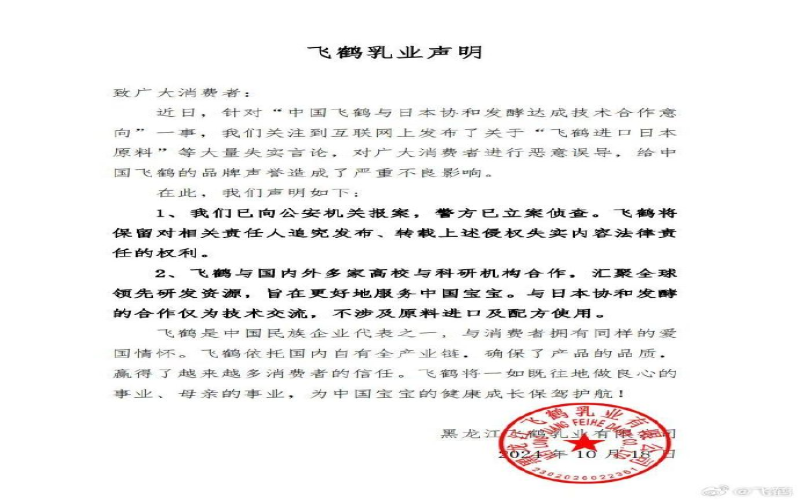
Feihe denies rumors of importing Japanese ingredients, saying a cooperation intention was misunderstood and it has reported the matter to police
On October 18, Feihe Dairy issued a statement regarding false information circulating online about "imported Japanese raw materials" and other rumors, stating that it had reported the matter to public security authorities and that a case had been opened. The controversy stemmed from a letter of intent for technical cooperation signed between Feihe and Japan's Kyowa Hakko, which was originally intended for the joint research and development of fermented lactoferrin technology, but was distorted into claims of raw material imports and even capital injection. Feihe emphasized that the cooperation remains only at the letter-of-intent stage and does not involve raw materials or capital. As a representative of domestic infant formula, Feihe has long been committed to breaking dependence on imported lactoferrin, as demonstrated by its first domestic production line. This article will sort through the ins and outs of the incident and restore the facts. [more…]
Analysis of Coffee Drinking Frequency and Health Risks: Ochratoxin A Contamination Levels and Population Exposure Assessment
Coffee is an essential daily beverage for many people, but discussions surrounding its safety have never ceased. As a fungal metabolite that may contaminate coffee, can ochratoxin A cause health damage to long-term drinkers? Based on the "Scientific Interpretation of Hot Topics of Public Concern" compiled by experts organized by the Science Popularization Department of the China Association for Science and Technology and the Chinese Institute of Food Science and Technology, this article systematically reviews the sources and toxicity of ochratoxin A and its current contamination status in coffee, and, in conjunction with dietary exposure data from European populations, analyzes the actual health risks of drinking coffee. At the same time, in light of the characteristics of coffee consumption in China, it provides a scientific and rational assessment conclusion to help coffee lovers eliminate unnecessary concerns and enjoy every cup of coffee with peace of mind. [more…]

Ethiopia's Awash Region Experiences Frequent Earthquakes, Coffee Export Transport Chain Faces Challenges
Recently, multiple consecutive earthquakes have occurred in the Awash Fentale area of the Oromia Region in Ethiopia, raising concerns among local residents and those in the coffee industry. This area is not only close to the capital, Addis Ababa, but also adjacent to the important coffee-producing region of Harar, and the earthquakes may affect the soil and coffee yields. At the same time, the risk of damage to road infrastructure, combined with port congestion caused by the Red Sea crisis, may further disrupt Ethiopia's coffee export transportation. In addition, the conflict in the north and the continued depreciation of the exchange rate remain major challenges facing the country's coffee industry, with planting costs constantly rising and the coffee price cap being raised again. This article will review the earthquake developments and their potential impact on the coffee supply chain. [more…]
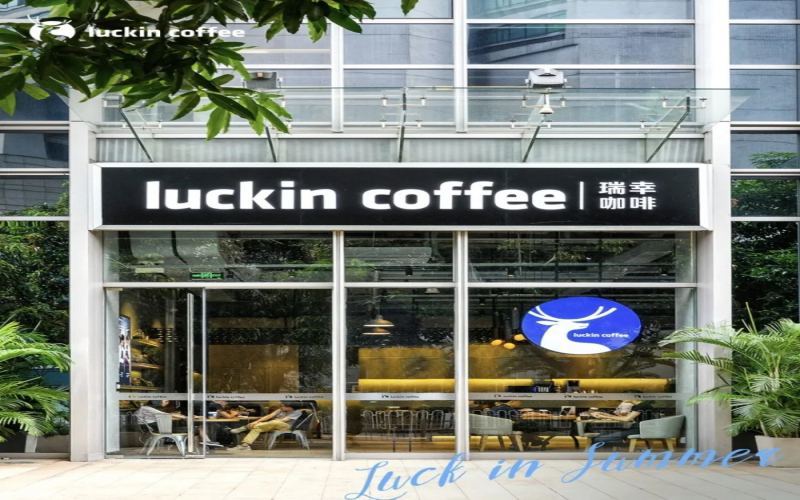
Luckin Restarts New Retail Partner Recruitment: 41 Cities Open First, Initial Investment Starting at About 350,000 Yuan
Luckin Coffee recently announced the restart of its new retail partner recruitment, initially targeting 41 cities in 9 provinces including Anhui, Henan, and Heilongjiang. The company states that no franchise fee is charged, but franchisees must cover upfront costs such as security deposits, design fees, renovation, and equipment, totaling approximately 350,000 to 370,000 yuan. The cities opened this time are all areas that already have franchise stores but with low density, and Luckin hopes to accelerate market penetration through the joint venture model. Its Q3 2022 financial report showed that revenue from joint venture stores increased by 116.1% year-on-year, becoming an important engine for performance growth. For inexperienced franchisees, the headquarters will provide support such as on-site store guidance, event planning, and online operations. [more…]
Complete unboxing record of the La Marzocco Strada espresso machine: Analysis of the pressure profiling technology in both MP and EP versions
In recent years, variable pressure extraction has become the most closely watched technological direction in the field of espresso machines. From Synesso to Slayer, and then to the Strada launched by La Marzocco, the design of pressure control valves has continuously evolved. This article provides a complete record of the unboxing of the La Marzocco Strada at the illy Coffee University in Shanghai, China, detailing the appearance, structure, and core differences between the Strada MP manual version and the Strada EP electronic version. The MP version directly controls water flow and pressure through an internal mechanical valve, while the EP version uses an electronic gear pump to achieve stepless pressure variation from 0 to 12 BAR and can store pressure profiles. For coffee enthusiasts following the technological development of espresso machines, as well as readers of Front Street Coffee, this unboxing record provides rare hands-on details and firsthand observations. [more…]
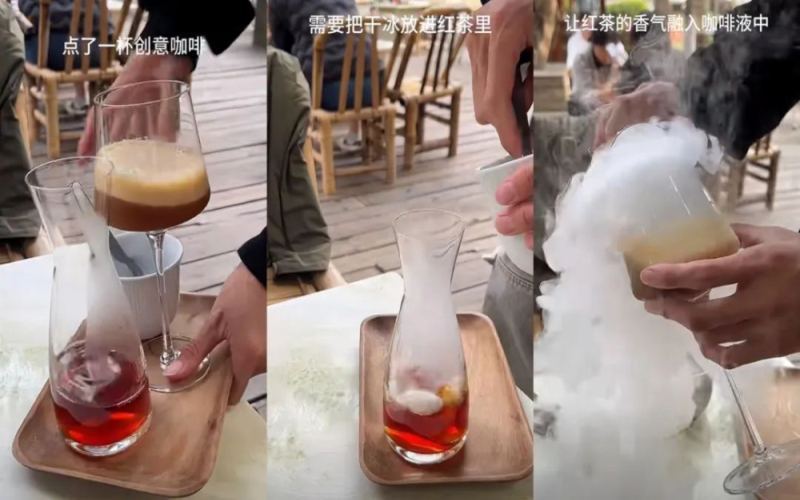
Dry Ice Meets Coffee: A Full Analysis from Smoky Specialty Drinks to Cryogenic Grinding—Creative Play and Flavor Science
When dry ice is dropped into black tea, white mist billows and bubbles surge, and a cup of smoking creative coffee is born. This presentation style, which appeals to both sight and smell, is sparking a new wave in the coffee world. From Hong Kong champion barista's Amber Coffee Brewery, to the extraction technique of freezing coffee beans before grinding, to the unconventional trick of using dry ice instead of ice cubes during pour-over, the applications of dry ice in coffee are far more diverse than one might imagine. This article walks you through the principles and flavor logic behind these creative operations, and shows how baristas use modern technology to give a cup of coffee a richer layered expression. [more…]
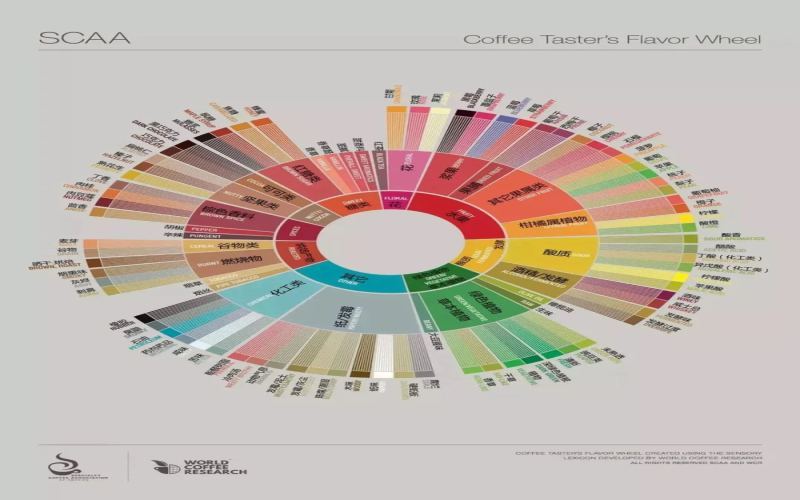
How can you tell if a latte tastes good? Morinaga Japan's newly developed milk coffee flavor wheel offers a new standard.
The coffee flavor wheel has always been an important tool for evaluating black coffee, but when it comes to drinks with milk added, such as lattes, consumers often lack a systematic reference standard. Recently, Japan's Morinaga Milk Company published a study in the journal Food Science and Technology Research, specifically developing a "milk coffee flavor wheel" for milk coffee. This flavor wheel is based on the real perceptions of 203 ordinary consumers, combined with discussions among 12 beverage developers, and selected 53 characteristic terms from 456 descriptions, striving to make it easy for the general public to judge the quality of a cup of milk coffee. This article will introduce in detail the research and development background of this flavor wheel, its creation method, and its significance for coffee lovers. [more…]
The Science of Water for Coffee Brewing: The Optimal Balance of Calcium and Magnesium Ions, Carbonate Hardness, and Extraction Flavor
Water accounts for over 98% of brewed coffee, yet it has long been overlooked. Different types of water—RO water, tap water, mineral water, soft water, hard water—have a huge impact on extraction flavor. In 2014, Christopher Hendon and Maxwell Colonna-Dashwood published research revealing how sodium, calcium, and magnesium ions influence the extraction efficiency of flavor compounds, and subsequently published the book "Water for Coffee," which systematically discusses the dynamic balance between GH (total hardness) and KH (carbonate hardness), and proposes the reverse thinking of "Roasting to water." This article will sort out these key findings to help coffee lovers understand how water quality shapes the flavor in the cup, and will retain relevant recommendations for the Front Street brand. [more…]

Mudanjiang sees a knockoff 1 Dian Dian store; peeling off the cup sticker reveals "1 Dian Tian," and the brand has responded that it has initiated legal action.
A tea shop in Mudanjiang City has sparked heated online discussion due to its striking resemblance to the chain brand 1 Dian Dian. The store not only copied 1 Dian Dian's signage and decor but also disguised itself as "1 Dian" by using a cup sticker to cover the last character of the logo—when peeled off, it revealed "1 Dian Tian." The official mini-program shows no such store, and the franchise area has not been opened to Mudanjiang, leading netizens to conclude it is a counterfeit shop. As public opinion grew, 1 Dian Dian officially stated in the comments section that it is "already on the path to defending its rights" and thanked netizens for their "sharp eyes." This incident not only left local residents disappointed but also once again brought the issue of counterfeit infringement in the tea beverage industry to the forefront. [more…]

Study Finds: Regular Coffee Consumption May Help Delay Muscle Aging, Triglycerides Become Key Component
Besides waking you up, coffee may also bring unexpected benefits for muscle health. A latest study jointly conducted by research institutions in Switzerland, Singapore, the United Kingdom and other countries shows that trigonelline, a natural plant alkaloid in coffee, can boost NAD⁺ levels in the body and improve mitochondrial function, thereby helping to maintain muscle strength and slow age-related muscle degeneration. Published in a Nature sub-journal, the study offers coffee lovers a new health perspective. However, the researchers also caution that coffee is only a supplementary aid—balanced nutrition and regular exercise are fundamental to keeping muscles strong. [more…]
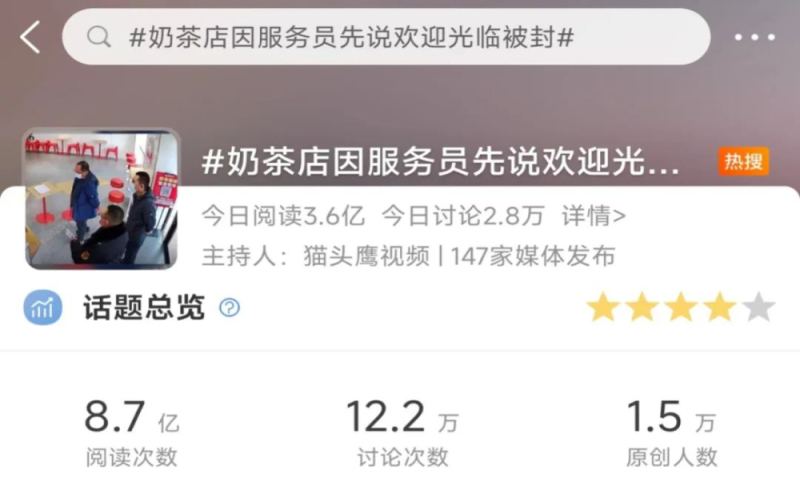
A simple "Welcome" led to the shutdown of a milk tea shop; official notice confirms abuse of power and holds those responsible accountable.
A milk tea shop was sealed and ordered to close on the spot by market supervision officials in under a minute—all because the staff said "Welcome" before asking customers to scan the QR code. The incident sparked widespread attention after it was exposed. An official statement later concluded that the law enforcement officers had abused their power and deliberately made things difficult; those involved have apologized and been disciplined. In this issue of coffee news, while we follow this incident, we also remind coffee professionals to be mindful of the boundaries of law enforcement in epidemic prevention and control, and we continue to bring coffee enthusiasts professional coffee knowledge and Front Street Coffee product recommendations. [more…]
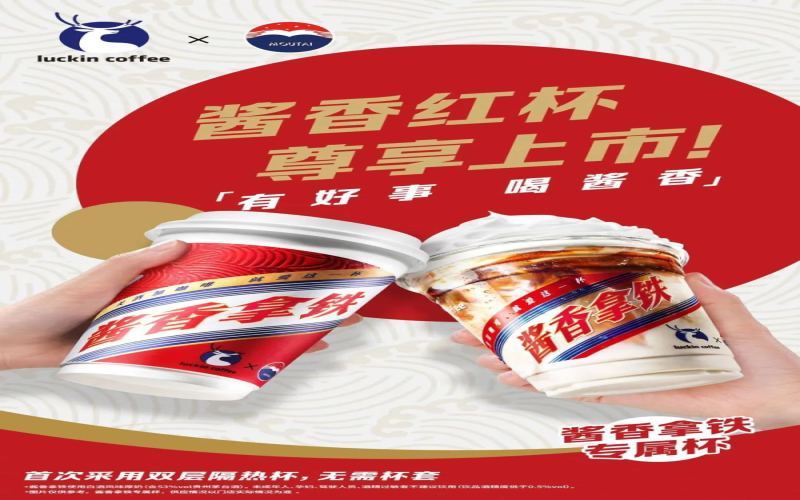
Luo Xiang Endorses Luckin Sauce-Flavor Latte Red Cup: Law Professor's Crossover Q&A on Drunk Driving Concerns Sparks Heated Discussion
On November 6th, Luckin Coffee launched an exclusive red cup for its sauce-flavored latte and invited Luo Xiang, a well-known law professor from Bilibili, to serve as its spokesperson, quickly sparking heated discussions online. Using classic cases like "outlaw Zhang San," Luo Xiang addressed consumers' concerns about driving safety after drinking coffee containing alcohol. This marks Luckin's first collaboration with an "internet celebrity" scholar, following previous spokespeople such as Tang Wei, Xiao Zhan, and Eileen Gu. However, after the endorsement news emerged, netizen reactions were polarized—some praised the keen insight, while others expressed dissatisfaction. This article will review the sequence of events, Luo Xiang's background, and reactions from all sides, and explore the considerations and challenges behind Luckin's marketing move. [more…]

Coffee grounds transformed into building material? Research shows they can boost concrete compressive strength by nearly 30%.
Every year, the world produces up to 60 million tons of waste coffee grounds, most of which end up in landfills, where they release carbon dioxide and methane as they decompose—and methane has 21 times the greenhouse effect of carbon dioxide. A research team at RMIT University in Australia tried pyrolyzing coffee grounds to replace part of the sand in concrete, and found that coffee grounds treated at 350 degrees Celsius and mixed into cement at a 15% ratio increased compressive strength by 29.3% compared with the standard formula. This technology not only finds a new outlet for coffee grounds, but can also reduce river sand mining and lower greenhouse gas emissions. However, the research is still at an early stage, and netizens have mixed views on its feasibility. [more…]